
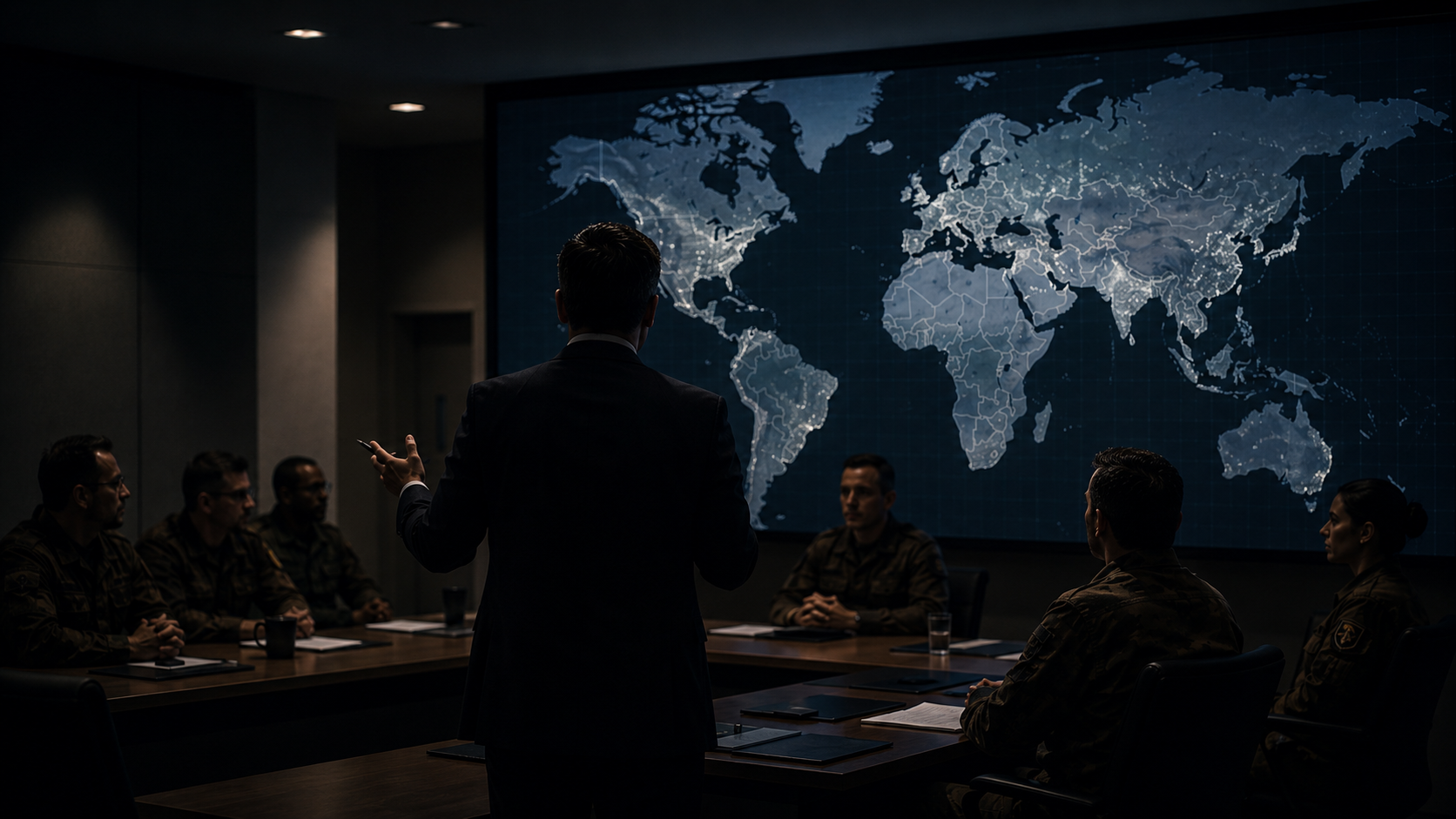
Strategic Communications
Supporting governments, defence and security institutions to understand complex information environments, communicate effectively during crisis and build sustainable strategic communications capability across the Middle East.
Governments, defence organisations and security institutions operate in an information environment that is faster, more fragmented and more contested than ever before. Information can move across traditional media, digital platforms and communities within minutes. During periods of crisis or instability, incomplete information, misinformation and deliberate disinformation can further complicate decision-making and undermine public understanding.
Effective strategic communications requires institutions to understand this environment, identify the audiences that matter and coordinate communication with wider policy and operational objectives. Stratum Global Risk supports governments, defence and security institutions and international partners with strategic communications advisory and capacity-building programmes across the Middle East.
Through specialist practitioners with experience in strategic communications, government and complex operating environments, we can support specific communications requirements or contribute to wider institutional development and security sector reform programmes.
Areas of Focus
Strategic Communications Planning
Effective communication begins with clear objectives and an understanding of how communications activity supports wider institutional priorities. Stratum can support organisations in developing strategic communications planning capability, including planning frameworks, audience understanding, coordination processes and approaches for integrating communications considerations into wider institutional decision-making.
Information Environment Analysis
Understanding how information moves, how different audiences perceive events and how narratives develop is increasingly important to governments and security institutions. Capacity-building programmes can strengthen the ability of organisations to monitor and assess the information environment, identify emerging issues and use analysis to inform communications planning and decision-making.
Crisis & Emergency Communications
Security incidents, natural disasters, political instability and other major events can create immediate demands for accurate and coordinated communication. Stratum can support crisis communications capability through planning, procedures, leadership development, scenario-based training and exercises designed to strengthen institutional readiness during rapidly developing events.
Countering Disinformation & Malign Influence
False or deliberately misleading information can create significant challenges for governments and institutions, particularly during periods of uncertainty or heightened tension. Stratum can support institutional capability to identify and understand disinformation, improve internal coordination and develop proportionate, credible communications responses based on accurate information and effective public communication.
Public Information & Institutional Communications
Public confidence can depend on institutions communicating clearly about their role, decisions and activities. Programmes can support the development of professional public information capability, including communications structures, coordination, media engagement, public messaging and approaches that improve consistency across institutional communications.
Strategic Communications Training & Exercises
Communications capability needs to function under pressure. Stratum can design professional development programmes and exercises that allow communications teams, institutional leaders and operational personnel to practise decision-making and coordination against realistic scenarios.
Integrating Communications with Decision-Making
Strategic communications should not operate separately from leadership, policy or operations. Decisions taken by governments and security institutions can shape the information environment, just as developments within the information environment can influence operational and policy considerations. Effective institutions therefore need mechanisms through which communications specialists can contribute to planning and decision-making from an early stage.
Stratum can support the development of these processes, helping organisations establish clearer responsibilities, coordination mechanisms and planning frameworks. This is particularly important during crises, when senior leaders, operational teams and communications personnel may need to make decisions simultaneously while circumstances continue to develop. Exercises provide an effective way to test these relationships and identify weaknesses before they are exposed during a real incident.
Crisis Communications & Institutional Resilience
How an institution communicates during a crisis can have a significant influence on public understanding and confidence. Effective crisis communication requires speed, but it also requires accuracy. Institutions need processes for verifying information, agreeing communications priorities and coordinating messages between multiple organisations. These requirements become more challenging when several government departments, security institutions or emergency services are responding to the same event.
Capacity-building programmes can help establish crisis communications structures before an incident occurs and test them through realistic exercises. This allows organisations to identify gaps in decision-making, information flow and coordination while there is still an opportunity to address them.
Regional Context & Cultural Understanding
Strategic communications cannot be separated from language, culture, politics and the wider social environment. Approaches developed in one country cannot simply be transferred into another and expected to produce the same results. Stratum combines a permanent Middle East presence with specialist international and regional expertise, enabling programmes to reflect local audiences and institutional realities while drawing upon established strategic communications practice.
This is particularly important for international programmes, where communications approaches need to support national institutions rather than impose external assumptions about how those institutions should engage with their own populations. Our programmes can be delivered directly with national organisations or as part of wider government, donor-funded and security sector development initiatives.
Developing Sustainable Communications Capability
The objective of capacity building is not simply to improve communications during a single campaign or crisis. Stratum focuses on helping institutions develop the people, structures and professional capability required to manage communications themselves. This may involve developing planning frameworks, strengthening analytical capability, training personnel, establishing crisis procedures or using exercises to test how different parts of an organisation work together.
Over time, these elements can help strategic communications become an established institutional capability rather than a reactive function activated only when problems occur.
Discuss a Strategic Communications Programme
Stratum Global Risk supports governments, defence and security institutions and international partners developing strategic communications capability across the Middle East. Speak with our team about strategic communications planning, information environment analysis, crisis communications, counter-disinformation, public information or training and exercises.