
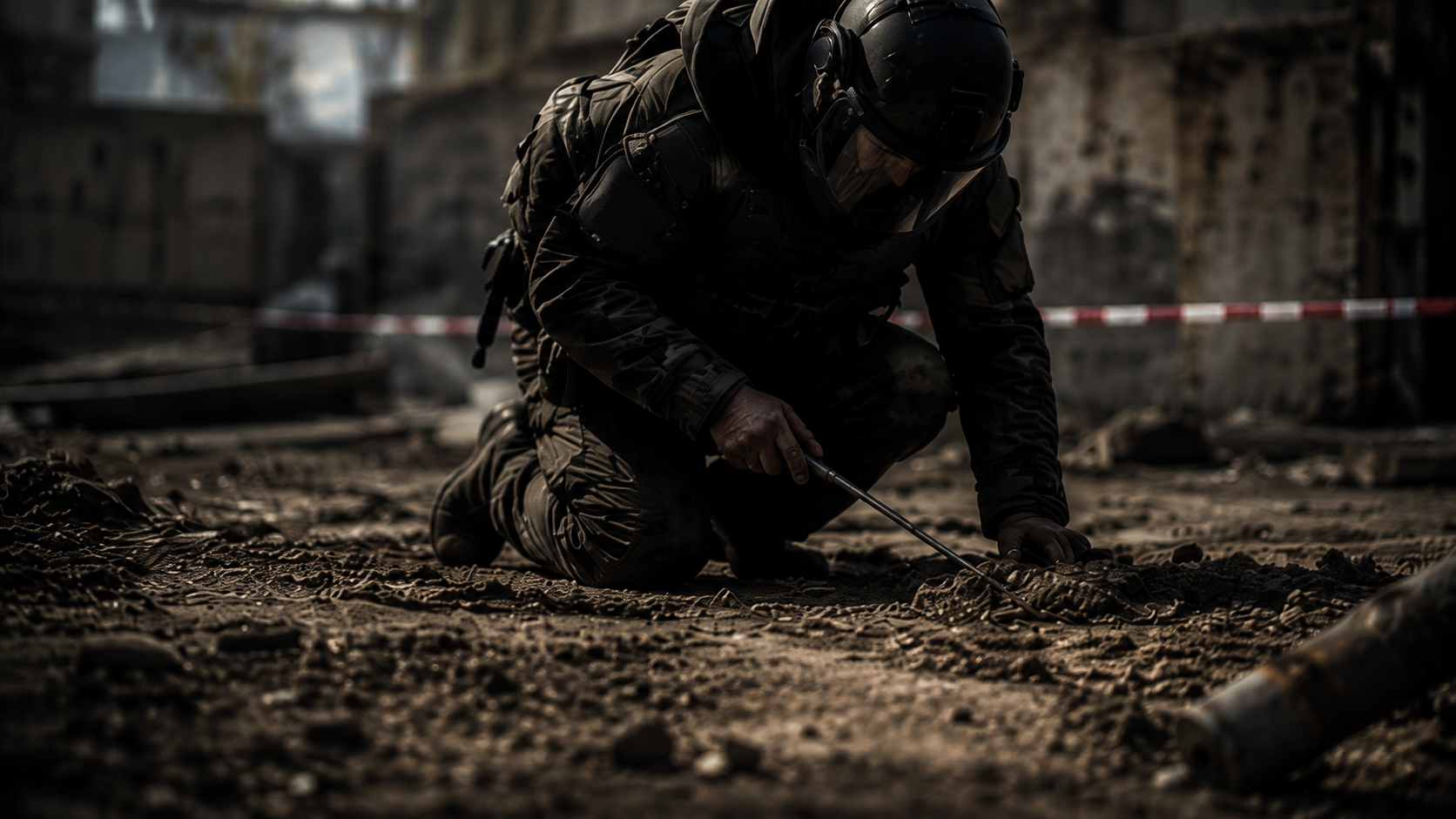
EOD & Explosive Hazard Management
Supporting governments, defence and security institutions to develop EOD, IED awareness and explosive hazard capabilities through specialist technical training and capacity building across the Middle East.
Explosive hazards remain a significant challenge across conflict-affected and post-conflict environments. Improvised explosive devices, unexploded ordnance and other explosive threats can endanger personnel and communities, restrict freedom of movement and complicate longer-term stabilisation and recovery. National institutions require appropriately trained personnel and specialist capabilities to understand, manage and respond to these threats safely and effectively.
Stratum Global Risk supports governments, defence and security institutions and international partners with EOD, IED awareness and explosive hazard capacity-building programmes across the Middle East. Through experienced EOD practitioners and specialist technical advisers, programmes can be developed around specific operational requirements, participant responsibilities and the existing capabilities of the partner institution.
Areas of Focus
EOD Capability Development
Effective explosive ordnance disposal capability requires appropriately qualified personnel supported by professional standards, technical competence and effective institutional structures. Stratum can support EOD capability development through specialist training, technical advisory support, mentoring and professional development appropriate to the roles and responsibilities of participating personnel.
IED Awareness & Threat Recognition
Personnel operating in environments affected by improvised explosive devices require an appropriate understanding of the threat and the actions expected within their professional responsibilities. Stratum can develop structured IED awareness programmes for defence, police, security and other relevant personnel, tailored to their role and operating environment.
Search & Detection
Professional search capability can support the protection of personnel, facilities, infrastructure and public spaces where explosive threats may be present. Programmes can support the development of structured search and detection capability for appropriately authorised personnel, alongside the professional standards and training required to sustain it.
Post-Blast Investigation
The investigation of explosive incidents can contribute to criminal investigations, intelligence development and a wider understanding of evolving threats. Stratum can support post-blast investigative capability within appropriately mandated police, security and specialist institutions, including professional development and coordination between investigative and technical functions.
Explosive Hazard Risk Education
Explosive hazards can continue to threaten communities and organisations long after active hostilities have ended. Risk education programmes can help reduce accidental exposure by improving awareness among personnel and communities operating in areas affected by explosive contamination.
Explosive Hazards in Post-Conflict Environments
The impact of explosive hazards can extend far beyond the immediate security threat. Unexploded ordnance, abandoned munitions and other explosive contamination can restrict access to communities, agricultural land and critical infrastructure. They can also delay reconstruction, complicate humanitarian access and present continuing risks to people returning to areas previously affected by conflict.
Developing capable national institutions is therefore an important component of longer-term recovery. Different organisations may have different responsibilities. Military EOD teams, police units, civil defence organisations, investigators and other specialist bodies can each contribute depending on national mandates and legislation. Capacity-building programmes should reflect these responsibilities and develop the capabilities required by each institution rather than applying the same technical training across different participant groups.
Developing National Technical Expertise
Specialist technical capability takes time to develop and must be maintained. Individual training programmes can address immediate requirements, but national institutions also need experienced instructors, appropriate assessment standards and opportunities for continued professional development. Instructor development and train-the-trainer programmes can progressively transfer expertise into national institutions, allowing them to train future personnel and maintain professional standards internally.
Where appropriate, programmes can be informed by recognised international standards and good practice while remaining adapted to national requirements and the operational environment. This approach allows specialist training to contribute to a wider and more sustainable national explosive hazard capability.
Discuss an EOD & Explosive Hazard Programme
Stratum Global Risk supports governments, defence and security institutions and international partners developing EOD, IED awareness and explosive hazard capability across the Middle East. Speak with our team about EOD capability development, IED awareness, search and detection, post-blast investigation, risk education or specialist instructor development.